Charming Panda Watercolor Animal Clipart for Creative Projects
Understanding the Visual Appeal of Watercolor Clipart
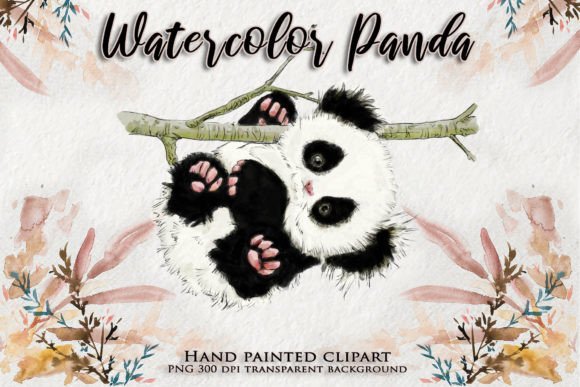
There is a specific warmth that watercolor art brings to digital and physical projects. Unlike flat vector graphics, watercolor textures mimic the organic feel of paint on paper, offering depth and a handcrafted aesthetic. Panda Watercolor Animal Clipart leverages this medium to present one of nature’s most beloved creatures in a soft, artistic light. The visual characteristics here are defined by fluid edges, subtle blending of grays and whites, and the natural "bleed" effect typical of wet-on-wet painting techniques. This style moves away from rigid, corporate imagery, instead offering a design asset that feels personal, gentle, and expressive.
When you look at a high-quality watercolor panda, you aren't just seeing a black-and-white animal. You are seeing a composition of textures. The "black" fur is likely a deep charcoal with blue or purple undertones, while the white areas are often defined by negative space or very pale washes to suggest form without heavy outlines. This approach makes the clipart incredibly versatile. It works seamlessly on light backgrounds for a delicate look, but it can also hold its own on darker, textured papers if the resolution is high enough. The personality of this particular asset leans toward the whimsical and the nurturing, making it an ideal choice for projects targeting families, children, or nature enthusiasts.
Strategic Applications for Designers and Entrepreneurs
As a creative professional, the value of an asset like Panda Watercolor Animal Clipart lies in its adaptability across various media. In the realm of brand identity, this style is particularly effective for businesses that want to communicate approachability and creativity. Think of a boutique children’s clothing line, an organic baby food brand, or a wellness blog. Using this clipart in logo design (provided the licensing allows) or as a recurring motif in packaging design creates an immediate emotional connection with the audience. It signals that the brand values softness and artistry over cold minimalism.
For those in editorial design and publishing, watercolor elements break up the monotony of text-heavy pages. A panda illustration can serve as a charming spot illustration in a magazine feature about wildlife, or as a chapter header in a children’s educational book. In the digital space, specifically social media graphics, this type of creative font (in this context, visual style) stops the scroll. The organic texture stands out against the hard edges of UI elements and standard photography. It is particularly useful for creating quote cards, announcement headers, or story highlights that need a cohesive, thematic look.
Furthermore, for those running print-on-demand services or Etsy shops, the utility is boundless. The description mentions usage for DIY invitations, cupcake toppers, and stickers. In web design, these graphics can soften a landing page, making a "404" error page or a "Coming Soon" sign feel intentional and delightful rather than broken or empty. The key is to treat these assets not just as decorations, but as functional tools for visual hierarchy. A watercolor panda can draw the eye to a Call to Action (CTA) or balance a heavy block of text, ensuring the layout feels harmonious.
Technical Integration and File Management
The utility of Panda Watercolor Animal Clipart is heavily dependent on the technical specifications of the file, which is why the provided ZIP file containing a PNG image with a transparent background at 300 DPI is the industry standard for professional work. The transparent background is the most critical feature here. It allows the painterly edges of the watercolor to blend into your project’s background color or texture without a jarring white box surrounding the image. This is essential for maintaining the organic feel of the artwork.
Working with these files is straightforward, but requires a basic understanding of file management. Once you download the ZIP file, extracting it is necessary to access the raw PNG data. On most operating systems, simply double-clicking the file will initiate this process. The .png format is a "lossless" format, meaning it retains all the color data and transparency information without the compression artifacts found in JPEGs. This is vital for print design; at 300 DPI (dots per inch), the image will remain crisp and clear even when scaled for physical products like signage or banners.
When loading the file into your machine's software—whether it is Adobe Photoshop, Illustrator, Canva, Procreate, or Silhouette Studio—the high resolution ensures that you can zoom in on details without pixelation. For crafters using cutting machines, the transparency allows for easier tracing if you intend to create a cut path around the panda's silhouette. Always ensure your software is set to CMYK color mode if you are designing for print, as the RGB colors of the screen can sometimes shift when translated to ink.
Maximizing Impact with Typography and Pairing
A common oversight in design is treating imagery and typography as separate entities. To truly maximize the impact of Panda Watercolor Animal Clipart, you must consider your font pairing. Because the clipart is organic, fluid, and hand-painted, pairing it with a rigid, geometric sans serif font can create a pleasing contrast. The clean lines of a sans serif act as a visual anchor, grounding the whimsical nature of the watercolor and ensuring the text remains legible. This combination works exceptionally well for modern typography layouts where you want to blend artistic flair with professional clarity.
Alternatively, leaning into the theme with a handwritten font or a script font can amplify the personal touch. This is a popular route for wedding invitations or greeting cards. However, readability is paramount. If the panda illustration is detailed, a highly ornate script might compete for attention, creating visual clutter. In this scenario, a simpler serif font often provides the best middle ground, offering elegance without overwhelming the artwork. The goal is to create a visual hierarchy where the panda draws attention, but the message is conveyed clearly.
For branding consistency, once you select your typeface, stick to it. If you are using Panda Watercolor Animal Clipart across your social media and packaging, the typography should bridge the gap between these different touchpoints. This consistency builds brand recognition. Whether you are a small business owner creating product labels or a blogger designing headers, the interplay between the watercolor asset and your chosen typeface will define the professionalism of your final product. It is this attention to detail—the alignment of texture, color, and type—that elevates a project from a simple craft to a polished design piece.