Animals a to Z Clipart: A Complete Alphabet for Your Projects
Understanding the Full Animal Alphabet Set
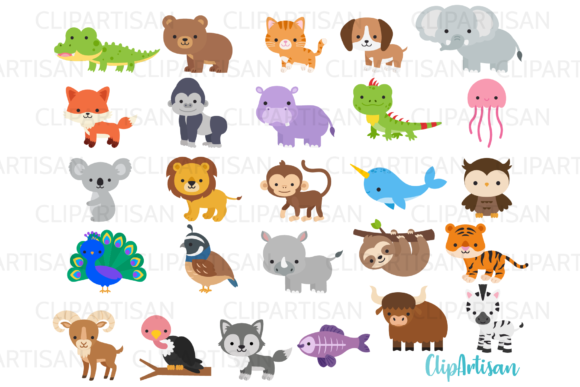
Finding the right visual assets can make or break a design project. The Animals a to Z Clipart collection offers a practical solution for anyone needing a complete animal alphabet. This set includes 26 individual animals, each representing a letter from A to Z. You receive a single ZIP file containing separate PNG and SVG files for every creature. The lineup starts with familiar choices like Alligator, Bear, Cat, and Dog, then moves through more distinctive selections like Narwhal, Urial, and X-ray fish. This range gives you both common animals for broad appeal and unusual picks for projects that need a unique twist.
Each image is designed at 12 inches on its longest side, with a resolution of 300 pixels per inch. That high quality matters when you are working on print materials where sharpness and clarity are non-negotiable. The transparent backgrounds on the PNG files make layering straightforward. You can drop these animals onto any colored background, pattern, or existing layout without dealing with awkward white boxes or mismatched edges. The SVG files add vector scalability, though the product notes that compatibility with cutting machines like Cricut cannot be guaranteed, which is worth keeping in mind if your workflow depends on those tools.
Where This Clipart Collection Shines
The real strength of an Animals a to Z Clipart set lies in its versatility across project types. For educators and parents, these images work well in classroom materials, flashcards, and alphabet learning aids. The consistent style across all 26 animals creates a cohesive look that feels intentional rather than cobbled together from random sources. For packaging design, think of a children's product line where each item in a series features a different animal letter pairing. The uniform sizing and quality make it easy to maintain visual consistency across an entire product range.
Small business owners and entrepreneurs can use these assets in several practical ways. A pet grooming service might incorporate animal imagery into social media graphics or promotional materials. A nature-themed brand could use select animals from the set in logo design explorations or brand identity elements. Bloggers covering topics like wildlife, parenting, or education can enhance their editorial design with relevant animal illustrations without commissioning custom artwork. The transparent PNG format also makes these suitable for web design elements, from website headers to illustrated blog post features.
Crafters and hobbyists represent another audience that benefits directly. Scrapbook layouts, greeting cards, party invitations, and printable wall art all become more engaging with well-drawn animal illustrations. Because each file is separate, you are not locked into using the entire alphabet at once. Pick the Lion for a safari-themed baby shower or the Owl for a graduation card celebrating wisdom. That flexibility is a genuine advantage over collections that bundle everything into a single sheet or require you to extract individual elements yourself.
Evaluating Fit and Making Smart Design Choices
Before committing any design assets to a project, it helps to evaluate whether the visual style aligns with your goals. Clipart collections carry a particular aesthetic. They tend to feel approachable, friendly, and illustrative rather than photorealistic or corporate. That personality makes the Animals a to Z Clipart ideal for projects targeting families, children, educators, and brands with a warm, approachable tone. If your project demands a sleek, minimalist, or highly technical look, illustrated clipart might not be the right direction, and that is perfectly fine. Knowing when not to use an asset is just as valuable as knowing when to use it.
Consider how the animal illustrations will interact with your typography choices. A playful script font or handwritten font pairs naturally with illustrated clipart, creating a cohesive, friendly aesthetic. For projects that need more structure, a clean sans serif font can provide balance without competing visually with the illustrations. The key is testing your font pairing alongside the clipart early in the design process. Place a few animals next to your chosen typeface and see if they complement each other or create visual tension. That simple step saves revision time later.
Resolution and file format deserve attention too. At 300 ppi and 12 inches at the longest point, the PNG files handle print production well for most standard applications. If you need to scale up significantly for large-format printing like banners or posters, the SVG vector files become important. However, keep in mind the noted limitation around cutting machine compatibility. If you run a small business producing vinyl decals or iron-on transfers, test the SVG files with your specific machine and software before committing to a large order or product line built around them.
Licensing is another practical consideration. Commercial use of premium font and clipart assets typically comes with specific terms. Review the license details to understand what is permitted. Can you use the images in products you sell? Are there restrictions on the number of physical or digital items you can produce? These details matter for entrepreneurs and content creators who plan to monetize projects built with these assets. When the terms are clear and favorable, it removes uncertainty and lets you focus on the creative work itself.
Practical Tips for Working with Animal Alphabet Clipart
Start by organizing the files in a way that matches your workflow. Rename them if needed so you can locate specific animals quickly. When building a project, resist the urge to use all 26 animals at once. Selective use creates stronger visual hierarchy and prevents your layout from feeling cluttered. Two or three animals chosen for their thematic relevance will almost always outperform a scattered collection of the entire alphabet.
Color consistency is worth addressing. If the clipart comes in a specific color palette, decide early whether you want to use the animals as-is or adjust their colors to match your project's palette. Even small color tweaks can help illustrations feel more integrated into a broader brand identity or design system. Most graphic editing software handles this easily with the PNG files, and SVG files are inherently more flexible for color adjustments since they store color data as editable attributes.
Finally, think about context. An elephant illustration works beautifully for a memory game or a nursery print, but it might feel out of place on a financial services website. The Animals a to Z Clipart collection is a tool, and like any tool, its effectiveness depends on matching it to the right job. Used thoughtfully, these 26 animals can support a wide range of creative, educational, and commercial projects with personality and consistency.